 Client portal


 Insights
Commonwealth contracts: What recent cases mean for indemnities and termination
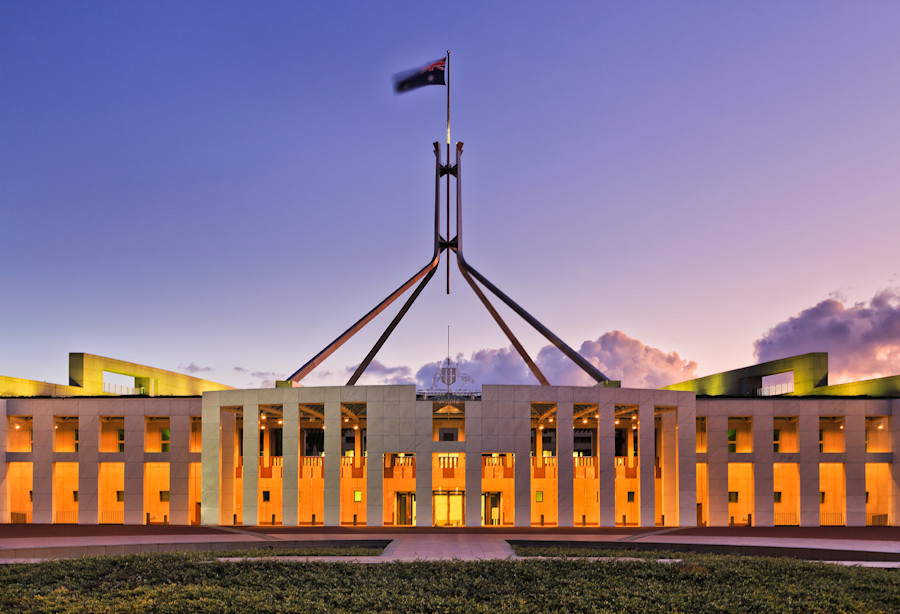
Two recent appellate decisions highlight important considerations for Commonwealth entities when drafting and managing contracts. One examines the scope of contractual indemnities; the other clarifies when a breach of contract may justify termination. Together, they reinforce the importance of clear contractual obligations, commercially realistic risk allocation and careful assessment of termination rights.
Broad indemnities: Why language alone may not determine liability
In Shamrock Civil Engineering Pty Ltd v Cleanaway Solid Waste Pty [2025] QCA 178, the Supreme Court of Queensland considered the proper construction of a broad indemnity clause in a building contract.
Shamrock Civil Engineering Pty Ltd (Shamrock) appealed a decision refusing summary judgment on an indemnity claim brought by Cleanaway Solid Waste Pty Ltd and Cleanaway Pty Ltd (Cleanaway). Cleanaway had engaged Shamrock to undertake works at a site operated by Cleanaway. During a period of heavy rainfall, part of the works area was affected by flooding, seepage and strong odours. Cleanaway alleged that it incurred approximately $31 million in rectifying that damage.
The dispute centred on an indemnity clause which required Shamrock to indemnify Cleanaway against:
"any liability, loss, claim or proceeding whatsoever in respect of loss, destruction or damage to any property, real or personal, arising out of or in the course of or by reason of the execution of the Works."
At first instance, the primary judge considered it arguable that the words "in the course of" did not require a causal nexus between the damage and the execution of the works. On that approach, it may have been enough that the rain damage occurred during the period of the works and at the site.
The Queensland Court of Appeal rejected that wide construction.
Doyle JA held that a mere coincidence of time and place was not enough. The damage had to have a sufficient connection with the "execution of the Works", meaning something more than the fact that the event occurred while the works were incomplete and, in an area, where the contractor had obligations to carry out Works.
The Court recognised that phrases such as “arising out of”, “in the course of” and “by reason of” may overlap, and that parties often use broad or overlapping words out of caution. However, that did not mean the clause should be given the broadest possible construction.
Similarly, the fact that the contract had a clause requiring Shamrock to hold insurance did not support the dramatic expansion of the indemnity that Cleanaway had argued for.
The indemnity still had to be given a coherent commercial meaning, having regard to the language actually used and the contract as a whole.
This decision reinforces the notion that courts construe contracts as a whole, having regard to the parties’ relationship, the commercial context and the language actually used. Courts may be reluctant to construe an indemnity as imposing unlimited liability unless the contract clearly supports that result, being, such a clause risks converting a contractor to an unlimited insurer.
Key lessons for Commonwealth entities
- Use of overlapping and broad phrases such as such as “arising out of”, “in the course of” and "by reason of" do not undercut the commercial reality faced by the parties to a contract.
- In turn, this case supports the fact that the continued use of broad indemnities remains an option for the Commonwealth.
- The Commonwealth should consider whether relevant liability caps and its own insurance arrangements remain appropriate for the given arrangement. The presence of a broad indemnity, as drafted here, does not mean that the contractor will bear the burden of losses it is not sufficiently connected to.
Contract termination: When is a breach of contract serious enough?
In Aviation Utilities Pty Ltd v Kahu NZ Limited [2026] WASCA 46, the Supreme Court of Western Australia considered whether multiple breaches of non-essential contractual terms were serious enough to justify termination.
The appellant, Aviation Utilities Pty Ltd, trading as United Aero Helicopters (United), and the respondent, Kahu NZ Limited (Kahu), were involved in the provision of two Black Hawk helicopters to assist the Western Australian Department of Fire and Emergency Services (DFES) during the 2021–22 WA bushfire season. After the relationship between the parties deteriorated, United purported to terminate the contract in July and August of 2022.
United alleged several breaches by Kahu, including unauthorised communications with DFES, operational and safety issues, and other instances of non-compliance. Kahu brought proceedings claiming damages for wrongful termination.
At first instance, the trial judge found that, although some breaches had been established on the facts, they were not sufficiently serious to justify termination.
On appeal, the WA Court of Appeal considered the four recognised bases on which a party may terminate a contract (citing Koompahtoo Local Aboriginal Land Council v Sanpine Pty Ltd [2007] HCA 61; (2007) 233 CLR 115 as authority). These include:
- Breach of an essential term.
- Renunciation, where a party shows an unwillingness to perform the contract, or intends to perform only in a manner substantially inconsistent with its obligations.
- Where a party is unable to render substantial performance of the contract or an essential obligation under the contract (also known as "renunciation", or "anticipatory breach" if the time for the performance of the obligation has not yet arrived).
- Where there has been a sufficiently serious breach of a non-essential term (also known as breach of an "intermediate" term).
The case turned on the fourth category (i.e. breach of an intermediate term). The Court confirmed that, where the term breached is non-essential, the relevant question is whether the breach deprives the innocent party of a substantial part of the benefit of the contract. That requires the Court to identify the benefit the contract was intended to provide, assessed at the time the contract was entered into.
United's termination failed because the breaches, even taken together, did not deprive United of a substantial part of the contractual bargain, which the WA Court of Appeal identified as Kahu's agreement to provide a fully operational Black Hawk helicopter so that United could perform its head contract. Nor did the breaches objectively show that Kahu was unwilling to be bound by the contract.
The WA Court of Appeal drew a clear distinction between conduct that is problematic and conduct that justifies termination. Not every breach entitles the innocent party to walk away. The breach must deprive the innocent party of a substantial part of the contractual benefit.
Key lessons for Commonwealth entities
- If an obligation is intended to be essential, the contract should be express.
- Consequences of non-compliance should be clearly stated, otherwise the Commonwealth may be left with the consequences of a breach of contract but not a right to validly terminate the contract.
- Before it considers termination, and where there is no express right to terminate, the Commonwealth must clearly evaluate whether the breach substantially deprives it of a core contractual benefit:
- It should consider whether the breach falls within one of the 4 recognised grounds for termination, as laid out above.
- If the breach is outside those 4 grounds, it is unlikely that the breach is serious enough to give rise to the right to terminate.
All information on this site is of a general nature only and is not intended to be relied upon as, nor to be a substitute for, specific legal professional advice. No responsibility for the loss occasioned to any person acting on or refraining from action as a result of any material published can be accepted.
Key contacts




Share


