 Client portal


 Insights
Victoria's Sustainable Data Centre Action Plan: what developers need to know
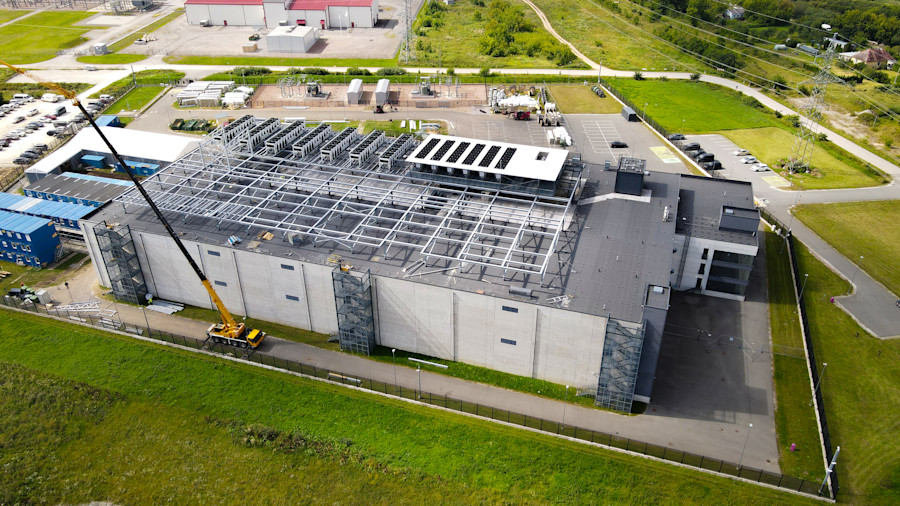
On 22 September 2026, the Victorian Government released its new Sustainable Data Centre Action Plan, signalling a significant shift in the assessment of new data centre projects.
While the Plan is not yet law, it points to a more prescriptive framework for new data centre development in which energy supply, water use and site suitability will become central feasibility considerations.
The Plan also supports the Commonwealth's move towards nationally consistent standards for data centres covering energy, water and land-use impacts.
Key proposed changes
- New land use term - Planning schemes will define "data centre" as land used to collect, distribute, process or store digital data. It does not include collecting, distributing, processing, or storing digital data if it is ancillary to another use of the land.
- Residential zones and 150 metre buffer - Data centres will be prohibited in residential zones, and a 150 metre buffer measured between a residential building and a proposed data centre building will be introduced and enforced via the planning system.
- Rural zones - Data centres will also be prohibited in rural zones unless located near and able to be serviced by critical infrastructure, such as major transmission infrastructure, substations, renewable energy facilities, battery storage, or recycled water infrastructure. This sits alongside the existing 2024 commitment to prohibit new data centres in the Green Wedge Zone.
- Referrals - The Victorian Planning Provisions will be amended to extend referral status to WorkSafe Victoria, Fire Rescue Victoria, VicGrid and the relevant water corporation for all data centre applications, including those determined by councils. EPA already holds referral status for relevant development types.
- Further policy - A new statewide planning policy will guide the location, design, scale and infrastructure requirements for data centre development.
- Energy supply - New data centre projects must offset actual operational electricity use by investing in new renewable generation and storage, and cover all connection costs and network augmentations, including necessary upstream augmentations.
- Water use and efficiency - New data centres using water-intensive cooling are expected to rely on recycled or other non-drinking water sources or be covered by a transition agreement with the water corporation. Required water infrastructure and upgrades must be funded by the project, and new facilities will be expected to meet prescribed water efficiency standards.
- Community - A Local Investment Guarantee to deliver local benefits is still to be developed with local government and industry.
What this means for developers
- Timing matters - The Premier's release indicates that the new rules will not apply retrospectively to applications already under assessment. The scope of the transitional arrangements, particularly how amended applications are treated, may therefore be significant. Developers with current or pending projects should keep a close watch on the implementation process.
- Due diligence - Site selection, energy supply, water servicing, grid connection requirements, and network and infrastructure upgrade costs are expected to become critical project feasibility issues. These matters should be investigated early, with timely engagement with the relevant water corporation, VicGrid and the relevant network service provider. The Investment Front Door is intended to provide a single entry point to government for major data centre investments.
- Watch the Commonwealth - Commonwealth legislation is intended for early 2027. The Victorian framework is expected to operate alongside emerging national standards, although the detail of those reforms is yet to be settled.
Next steps
The Plan does not specify a timeframe for implementing the proposed planning scheme amendments. It indicates that detailed siting, design and built-form guidance will be developed with stakeholder input during 2027. Further detail is also expected on the expanded referral arrangements, the Local Investment Guarantee and the interaction between the Victorian framework and proposed Commonwealth reforms.
For further information on the Plan and its potential implications for your projects or interests, please contact our Environment & Planning, Energy Transition, or Real Estate & Projects teams.
All information on this site is of a general nature only and is not intended to be relied upon as, nor to be a substitute for, specific legal professional advice. No responsibility for the loss occasioned to any person acting on or refraining from action as a result of any material published can be accepted.
Author




Key contacts




Juliette Reskov
Lawyer

Share


